A floor that is actually de-greased
We aim to remove greasy residue, not mask it. The difference shows up in traction, appearance, and how the floor responds to normal daily mopping after the deep clean.
Serving Arlington, Texas & surrounding areas
Mon–Fri 8am–6pm · Sat 9am–2pm
Cut through grease, restore slip resistance, and get tile and grout truly clean without disrupting your service. We work around prep schedules and closing times to keep kitchens safe and inspection-ready.
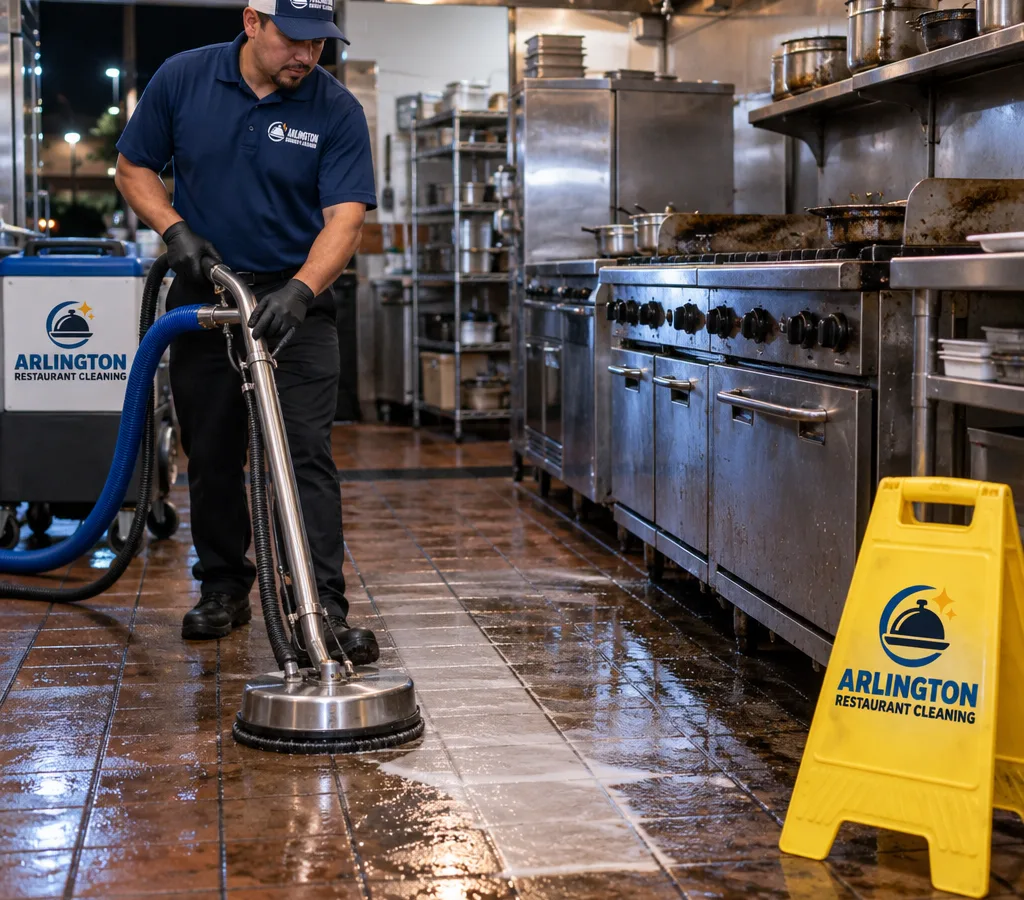
Restaurant kitchens fail on floors for one reason: grease. It migrates from fryers, grill stations, dish areas, and traffic paths, then locks into textured tile and grout. Mopping spreads the film around, and the floor keeps getting darker, stickier, and more slippery.
Arlington Restaurant Cleaning provides Commercial Kitchen Floor Cleaning for Arlington operators who need a reliable way to remove buildup, improve traction, and keep the back-of-house looking and feeling sanitary. We focus on tile-and-grout kitchens where the problem is not surface dirt. It is embedded soil and oil that needs heat, chemistry, agitation, and controlled rinse and recovery.
Our work is built around restaurant realities: tight aisles, equipment legs, floor drains, and the need to be open on time. We can plan a one-time deep clean after a busy stretch, or put your kitchen on a repeat schedule so grease never gets the chance to harden.
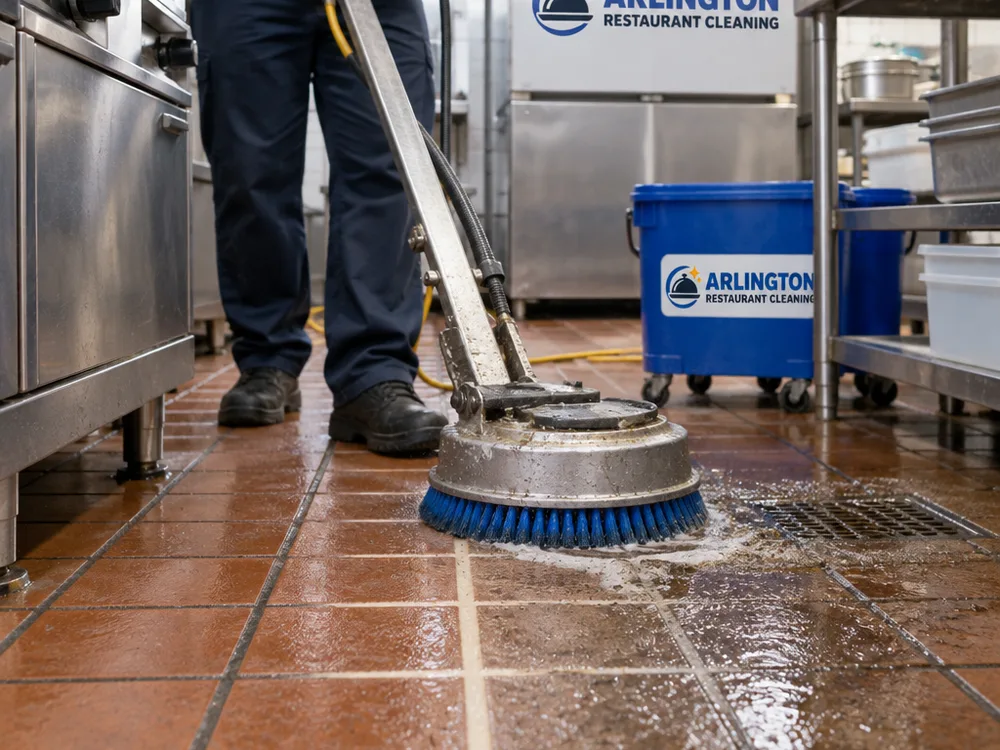
Effective restaurant floor degreasing is a process, not a stronger mop solution. For most kitchens, the goal is to break the bond between oil and the floor, lift soil out of grout lines, and remove the slurry instead of pushing it into corners.
What we typically address during Kitchen Floor Degreasing:
We use commercial degreasers selected for kitchen soils, mechanical agitation for textured tile, and controlled rinse-and-extract so the floor is not left with a soap film. If the surface has a factory texture or a quarry-style tile, we adjust tools and dwell time so we clean down into the texture without harming the surface.
If you are also comparing providers for full-facility service, our restaurant cleaning services can be scheduled alongside kitchen floor work to reduce disruptions and keep standards consistent across the building.
We aim to remove greasy residue, not mask it. The difference shows up in traction, appearance, and how the floor responds to normal daily mopping after the deep clean.
Restaurant tile cleaning varies by material and finish. We match chemistry and agitation to the floor so it gets clean without etching, haze, or premature wear.
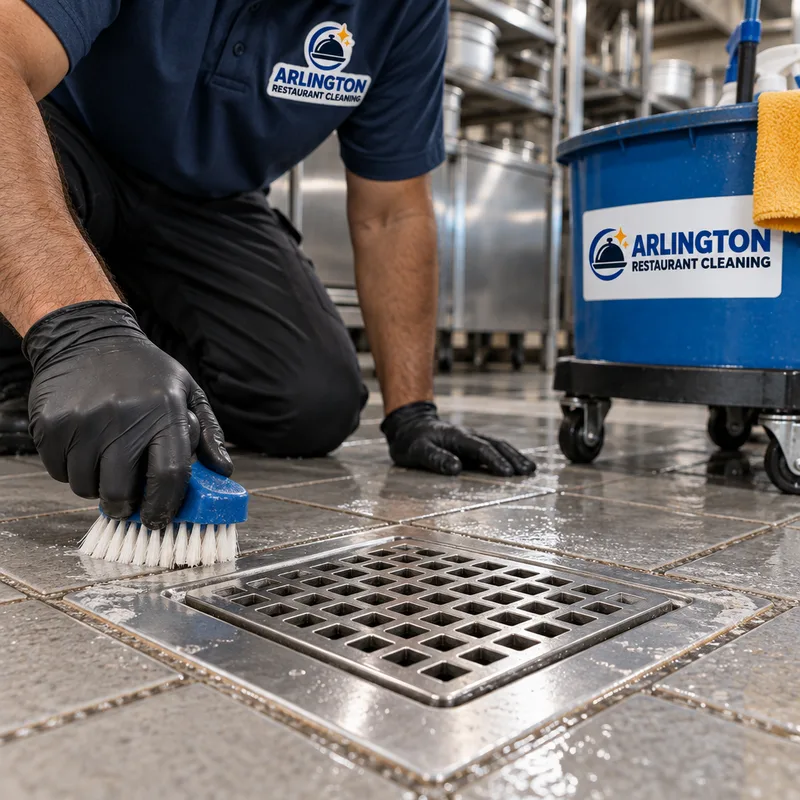
Grout holds oil and soil below the surface. We use dwell time and agitation to lift embedded grime, then rinse and recover so the lines are not left loaded with dirty solution.
Most kitchens need cleaning when the doors are closed and the line is cool. We plan for access, dry time, and re-entry so you can open on schedule.
We target corners, edges, transitions, and cook-line approaches where slips start. Those areas often look fine after mopping but fail when grease keeps building underneath.
Before work starts, we confirm what areas are included, what needs equipment access, and what you can expect on the first deep clean versus maintenance visits.
Step 1 of 6
We look at the kitchen layout, tile type, grout condition, and how grease is tracking. We also note drains, transitions, and any areas where slip resistance is a concern.
Step 2 of 6
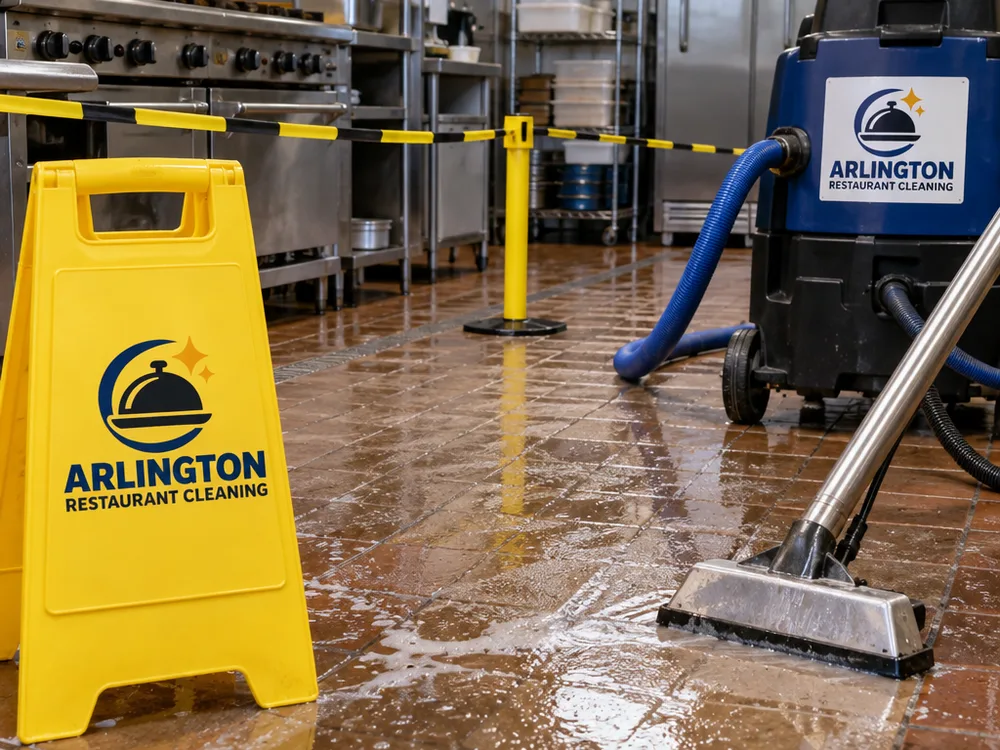
We set wet-floor signage, protect nearby walls and thresholds as needed, and coordinate around movable items. If heavy equipment cannot be shifted, we clean right up to accessible edges and detail the perimeter.
Step 3 of 6
Degreaser needs contact time to break down oils. We apply it evenly and let it dwell long enough to do the work, reapplying where the floor is heavily loaded.
Step 4 of 6
We scrub with the right pads or brushes for your surface. Grout lines get extra attention because that is where grease and soil remain after routine mopping.
Step 5 of 6
We rinse and recover the dirty solution so it leaves the kitchen rather than drying back onto the floor. We detail edges, corners, and around fixed items where residue collects.
Step 6 of 6
We leave the area safe to re-enter as it dries, then recommend a realistic maintenance cadence based on your menu, volume, and how quickly grease builds back up.
Commercial Kitchen Floor Cleaning in Arlington typically runs about $0.35 to $0.90 per square foot for routine service, while first-time deep Restaurant Floor Degreasing with heavy grout restoration is often $0.90 to $1.75+ per square foot, depending on buildup and access. Small kitchens may have a minimum trip charge.
Your price depends on total square footage, tile texture, grout condition, how much detail work is needed at edges and under reachable equipment, and whether we are cleaning one zone or multiple areas in the building. The exact cost is confirmed after a walk-through or photos and a written scope.
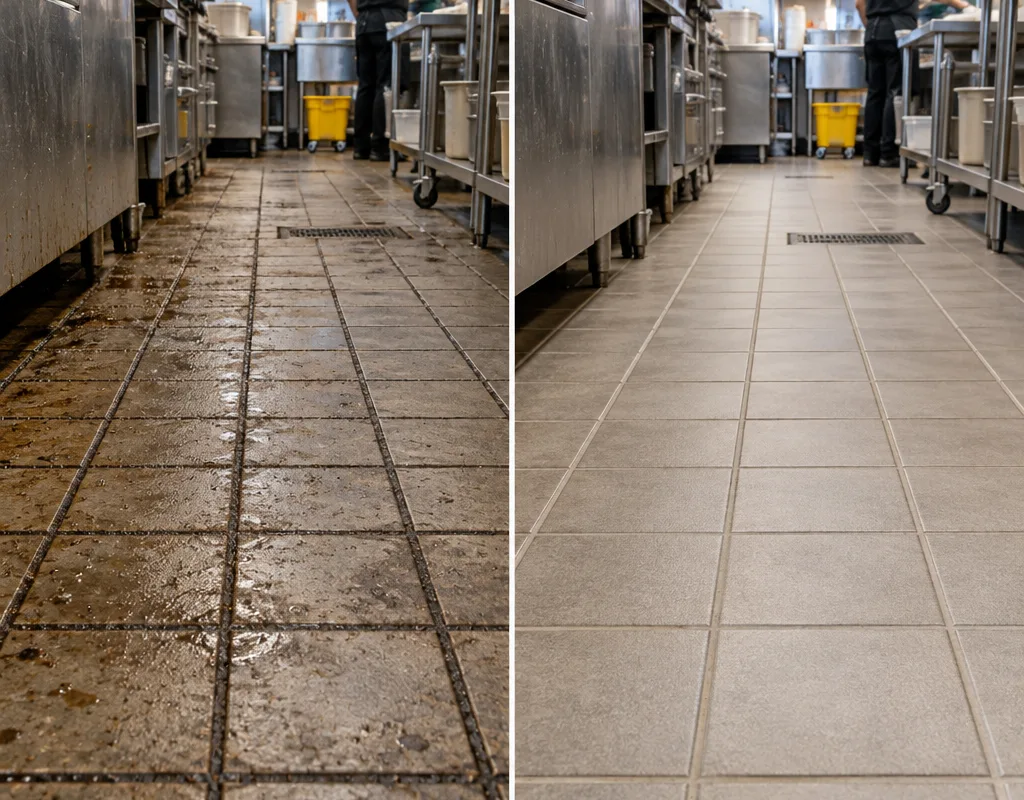
In Arlington, many restaurants cluster along high-traffic corridors like Cooper Street and South Collins Street, where long service days and high volume make floor buildup happen fast. For kitchens near entertainment traffic around AT&T Stadium and Globe Life Field, post-event rushes can mean heavier grease tracking and less time for thorough end-of-night mopping.
We plan commercial floor cleaning around what matters most: when your line shuts down, when deliveries arrive, and how quickly the kitchen has to be back online. If you need work completed between close and open, we focus first on the highest-risk lanes and the areas that fail health and safety expectations most often: cook-line approaches, dish areas, and transitions.
Our team is based at 1180 W Pioneer Pkwy, Unit 5 in Arlington, so scheduling and follow-up are straightforward for local operators who want a consistent standard across repeat visits.
Most kitchen floor degreasing takes 2 to 6 hours depending on square footage, buildup, and how much detailing is needed along edges and fixed equipment. A first deep clean usually takes longer than maintenance visits because the grout and texture need extra agitation and more rinse-and-recovery passes.
A proper Restaurant Tile Cleaning should reduce slipperiness because it removes greasy film rather than leaving soap residue behind. The key is using the right chemistry and then rinsing and extracting thoroughly so the floor is left clean and matte, not coated.
Yes. We clean right up to accessible edges and detail around legs, along baseboards, and in corners, which are common grease traps. If you can have certain items rolled out or lifted safely, we can include those footprints for the most complete result.
Most restaurants benefit from a deep grout-focused clean quarterly or semi-annually, then lighter maintenance visits on a schedule that matches grease load. Kitchens with a heavy fry program often need more frequent Restaurant Grout Cleaning along the cook line because grout holds oil and darkens faster than tile.
We use controlled pressure and extraction methods appropriate for indoor kitchens so dirty water is recovered and not driven into walls, under baseboards, or into electrical areas. The approach depends on your floor type, grout condition, and how the space is built around drains and thresholds.
Have the floor clear of loose items, remove floor mats, and let us know about any sensitive areas near the cook line or dish station. If you can sweep up debris first, it speeds up the degreasing phase and helps us focus time on embedded soil in the grout and texture.
Tell us your kitchen layout, floor type, and preferred service window. We will recommend a practical cleaning plan, confirm access needs, and provide a written scope for Commercial Kitchen Floor Cleaning in Arlington.